Showing posts with label gender. Show all posts

Saturday, July 12, 2008

Gender and Well-Being: Herpes

Missed a post but this replaces Friday's and end the series on Well-Being.

Black communities and communities of color and lack of affluence have suffered horrible injustices related to health disparities. The legacy of the Tuskeegee Syphillis experiments is one of the worst reminders within the black community.

Today another health disparity lurks within our community and whites/outsiders are not the culprit though historical legacy of racism around health certainly is a factor. Herpes.

Attention on the viral infection known as Herpes should be a major concern for the average sexually-active black man or women than perhaps AIDS/HIV. Why? Because Herpes Simplex I and II are often difficult to detect. THough you may experience tingling sensations and lesions around your buttocks, suffer unusual breakdowns in your immune system akin to flu like symptoms, or have sores appear on your face, many show no symptoms not unlike Syphillis.

As a result, Herpes is easily transmitted. Some report that as few as 1 in 5 or as many as 1 in 8 are infected with the disease in the general population in the U.S. Herpes is incurable though not terminal. It is a silent and unnoticable health risk in relationships with black men and/or women. It is particularly a public health concern among sexually-active black teens.

According to http://www.herpes.com:
Oral herpes, an infection caused by the herpes simplex virus, is estimated to be present in 50 to 80 percent of the American adult population. 20 percent, over 50 million people, are infected with genital herpes, also caused by the herpes simplex virus, and the majority of these cases may be unaware they even have it. Studies show that more than 500,000 Americans are diagnosed with genital herpes each year, and the largest increase is occurring in young teens.

There is no cure for herpes to date. Supporting your immune system should be your first goal. A weakened immune system is more prone to outbreaks. Efforts to develop a herpes vaccine by biotechnology companies are ongoing. Until an effective herpes vaccine or cure for HSV infection is found, the prevailing approach to treatment continues to be suppressive antiviral therapy.
A website tracking AIDS reported in 2006 called AIDSMAP stated:
  • "the prevalence of genital herpes is two times greater in African Americans than among whites with as many as 50% of African Americans infected.

  • 'Our data confirm that African American men are approximately twice as likely as white men to be infected with HSV-2', write the investigators."
Another website http://www.differenceblog.com/2007/11/gender-and-herpes.html stated:
Women (in general) were more likely to test positive for Herpes Simplex Virus Type II (HSV-2), the virus strain associated with genital herpes. Researcher Sara Head also found that African-Americans and those less fearful of HSV-2 were more likely to test positive for HSV-2. Sara Head is a research assistant at the University of Kentucky College of Public Health
From Wikipedia:
For genital herpes, condoms are highly effective in limiting transmission of herpes simplex infection. however condoms are not completely effective. The virus cannot pass through latex, but a condom's effectiveness is somewhat limited on a public health scale by their limited use in the community, and on an individual scale because the condom may not completely cover blisters on the penis of an infected male, or the base of the penis or testicles not covered by the condom may come into contact with free virus in vaginal fluid of an infected female.
One website indicated two critical issues:
  • Infection triples the risk of acquiring AIDS from an HIV-infected person
  • Treatment cuts the odds of transmission in half
All these indicators suggest that we don't talk about Herpes in productive or informative ways not only in the black community, but in my experience in our relationships. Nor have I ever really talked about it in my dating, with sexual partners or other until now. It's a topic barely mentioned on online dating profiles. Disease-free hides any attempt at that publicly. It's the thing that is NOT said that matters. I intend to keep this matter public and raise it ongoingly.

QUESTION FOR COMMENT: How would you begin this conversation? Can we really afford to keep it so secret anymore? And what should we discuss next week as a theme? Any suggestions?

RESOURCES
  • http://www.cdc.gov/nchstp/dstd/Press_Releases/AfAmericans2000.htm
  • http://www.cdc.gov/std/herpes/STDFact-herpes.htm
  • http://pharmamkting.blogspot.com/2007/07/gsks-race-based-herpes-awareness.html
  • http://www.globalherbalsupplies.com/herpes/stats.html

Wednesday, July 9, 2008

Gender and Well-Being: Live Longer, Have Less Stress with More Sex

In an article in THE INDEPENDENT July 1, 2008 by Brit Dan Roberts, making love, being touched and even getting regular hugs from a loved one was found to not only make you feel good but boost your immune system and can even reduce the risk of prostate and breast cancers. So could sex save your life? Here are the main points of the article:
  • A US study carried out in 2000 found that 32 per cent of the 1,866 female respondents who reported masturbating in the previous three months did so to help them sleep.
  • A study in the journal Biological Psychology revealed that people under stress have better responses to stressful scenarios if they have engaged in intercourse vs. other sexual behaviours or abstained altogether.
  • "A great deal of research has shown that touch has a naturally calming effect on human beings, whether it's linked to sex or not. Of course, being touched by someone you care about will double the calming effect." (Julia Cole)
  • Having sex once or twice a week has been linked with higher levels of an antibodies that boost your general well-being and immune system. "We know that when you're feeling good about yourself your body fights off illness and disease better – so the healthier we are psychologically and emotionally, the healthier we are physically." (Psychosexual therapist Paula Hall).
  • Australian researchers reported in the British Journal of Urology International that men who had at least five or more ejaculations weekly during their twenties reduced their risk of getting prostate cancer by a third.
  • Research in France found higher risk of breast cancer in those women without sexual partner or who had sex less than once a month.
  • Having sex and orgasms is a key part of improving intimacy and ensuring a healthy long-term relationship – which has been linked to a longer lifespan in a number of studies.

Tuesday, July 8, 2008

Gender and Well-Being: Attraction is not a choice

This may not seem like a public health issue. It's not being reported by the World Health Organization, but hundreds of people are suffering from the affliction. I found this resource on a new site I discovered called HOWCAST.COM.

The affliction is thinking you can make someone attracted to you. Leads to thwarted expectations and unnecessary upsets in men and women. We focus all our attention on the one we find attracted and fail to get what this speaker presents: Attraction is not a choice. Check it out! Getting this might leave you with a lot less suffering around the so-called rejection some of us think we experience when the person who is the object of our attraction simply says I am not attracted to you.

David DeAngelo Advanced Dating Training Programme (Part 1)

Monday, July 7, 2008

Suicide Rate among Black Males (15-24) Doubled Since 1980 While Global Suicide Rate Exceeds War and Murder

The suicide rate among young Black men has doubled since 1980, making it the third leading cause of death among Black males ages 15 to 24 according to Joseph Williams at Essence.com. And the problem afflicts both youth at-risk youth and men from affluent, intact families. Check out his article on the suicide watch for black males.
The suicides of James Dungy, 18, son of NFL coach Tony Dungy, in 2005, and Randy Parker, 23, stepson of legendary rapper KRS-One, last July, have sounded an alarm, says Dr. Annelle B. Primm of the American Psychiatric Association. "Young Black men are looked upon in a negative way that corrodes their self-esteem and self-value," she says. "That translates into a sense of hopelessness."

This trend, the increasing rate of suicide among men is a global trend not exclusive to the black US community. The global suicide rate for men has been alarming since 1950 according to the World Health Organization - WHO (See WHO chart "Evolution 1950-2000 of global suicide rates per 100,000").

Something about gender is off, is not working, around the world but we all gotta start where we are to make a difference. I live and am part of the black community. What I am not being responsible for is that those saggin' pants I am complaining about... they are the likely victims of violence at their own hands or others. Who am I in the matter? Who are you?

THIS WEEK: I am focusing on how gender issues are impacting public health concerns and well-being.

What's the worst in all this? According to a 2004 report by the World Health Organization
Suicide kills more people each year than road traffic accidents in most European countries....And globally, suicide takes more lives than murder and war put together, says the agency in a call for action.

Thursday, July 3, 2008

Exploring Gender Cross-Culturally: Africa, Gender and Development

In the representations of Black America we see through media and even through our neighborhoods, patriarchy tends to dominate. Even when it is said that women run the church, the school and even the home, it is men whom tends to be seen as the head of the household. Even his absence points to this as we speak often about the impact of not having a father on the wife/female partner, sons and daughters not to mention the community from both a generational and an economic development perspective. Women are increasingly becoming the heads of households around the world and since women tend to be paid less than men but often have children, this has led to the increasing femininization of poverty. So gender and economic development should be a concern for us all.

PRIORITY AFRICA - Gender Equality


Today, I found an interesting article online by Elizabeth ANNAN - YAO titled "African Gender Research in the New Millenium" She writes:

Gender relations in patrilineal communities differ greatly from those in matrilineal communities. In the former, women tend to be totally submissive to men (their
father, brothers, husband, uncles… ) and have hardly any decision-making powers nor the freedom of speech in public. Some common examples are that women easily yield to forced marriages; they have no political attributions and cannot inherit property…

On the other hand, in matrilineal communities, although women are submissive to men, they have some decision-making powers and liberty of expression and can generally choose their own husband. They can be Queen-Mothers in the political domain and can even inherit property from their maternal uncles and their mother...

Gender relations in general, but particularly in Africa, are always patriarchal in nature ... whether in a matrilineal or a patrilineal community, or whether in the upper classes of society, men always impose themselves on women and insist on the subordinate status of women. There is therefore the need to challenge gender inequalities, gender stereotypes, biased attitudes and harmful practices against women and also all forms of discrimination against women in order to promote gender equality which is a necessary tool for development.
I know you readers out there are reading. I can see I get hits everyday. My blog gets traffic. What would really make a difference is for this blog to live in both a read and write culture. Try commenting once a week if you read once a week.

Stephen Lewis on Gender Equality and the Women of Africa. - 1 min - Sep 29, 2006

Here's a question for the day: What differences do you perceive around your gender expression or role and your relationships with the economy, finances, money, your earning power aka your job/career, power relations at work or home, and even in dating or marriage relative to money?

Monday, June 23, 2008

George Carlin R.I.P!

So much of what my life is coming to be about is in some way epitomized by social commentator and philosopher as counter-culture comedian George Carlin who died in Santa Monica on Sunday evening of cardiac arrest. What I mean is that "being offended" has increasingly become a resource for discovering how American culture ticks, what makes racism and sexism and the lack of Success with opposite sexes tick. Being offended seems to point to many of our cultural superstitions and Carlin was a pro at distinguishing such superstitions.
"The whole problem with this idea of obscenity and indecency, and all of these things — bad language and whatever — it's all caused by one basic thing, and that is: religious superstition," Carlin told the AP in a 2004 interview. "There's an idea that the human body is somehow evil and bad and there are parts of it that are especially evil and bad, and we should be ashamed. Fear, guilt and shame are built into the attitude toward sex and the body. ... It's reflected in these prohibitions and these taboos that we have." AP article
Carlin was the first host for Saturday Night Live in 1975 and was a winner of several Grammys. [His] "jokes constantly breached the accepted boundaries of comedy and language, particularly with his routine on the 'Seven Dirty Words' " for which he was arrested on charges of disturbing the peace in Milwaukee in 1972. Though the case was dismissed citing free speech and the lack of any disturbance, after being aired on WBAI-FM radio in NYC, a 1978 Supreme Court ruling upheld the government's authority to sanction stations for broadcasting offensive language during hours when children might be listening.

"So my name is a footnote in American legal history, which I'm perversely kind of proud of," he told The Associated Press earlier this year (ibid).

I have to admit when I woke to the news on NPR this morning, I was so sad to hear of his passing. I love what the Reuters wrote: Edgy comic dies as "a counter-culture hero famed for his routines about drugs, dirty words and the demise of humanity." Such moments of loss remind me why I love living in a YouTube era. I can share Carlin with those of you unfamiliar with his work. Thought it fitting to bring him into the SUCCESS with the OPPOSITE SEX(TM) blog because he brought gender issues as well as issues of war, whiteness, and corruption in American politics to the fore in an inimitable way. Check it out!

Pro Life is Anti-Woman - George Carlin

Saturday, June 7, 2008

Index under Sex or Fantasy


From one of my favorite curious
blogs called INDEXED by Jessica Hagy.
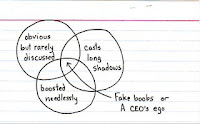
This index card is labeled "Robin is that you?". LOL!! Click on the index card to go to the site.

Me on the Year-End Cruise laughing it off.

Sunday, June 1, 2008

The Singles Map Says NY-NJ is a perfect place to be a single man


If you're looking for women, move to NY-NJ. Men move to LA-Long Beach.

If you thinking of move as a single woman, move West. Single man, move East. Click on the singles map from National Geographic Feb 2007 issue.

Why is it that both the country is divided and men and women seem to be moving in opposite directions?

From DC to Boston are cities with large numbers of women over men. In urban centers from Newark to Connecticut, there are 185,000 more single women than men.

Wednesday, April 2, 2008

GENTLEMAN-LINESS vs. MASCULINITY

When talking about male gender stereotypes, we should first take a step back and ask ourselves: what is manliness, anyway? As we explore the answers to that question, it becomes obvious that definitions of manliness aren't always consistent between cultures. More important, though, is the fact that the definition of manliness isn't a static one: it has a tendency to change over time. As American society crosses into the 21st century, we are experiencing shifts in what gender stereotypes are socially acceptable. Gone are the days when little Jimmy would go outside to play stickball with his friends every afternoon. Today, the average male youth participates in a host of activities that transcend male and female lines. He talks about his feelings. He takes cooking as well as woodworking. For many, manliness is less about eating red meat and watching football, and more about gentleman-liness, for lack of a better term.

As American men search for what it means to be male, it become obvious that gender equality is not exclusive of gender identity and role. One blog, The Art of Manliness, embodies that new American male identity. Its writers focus on contemporary interpretations of the core values of masculinity, using them as a path to becoming a gentleman. I recommend the blog to anyone else - it's often a great read. Click here for The Art of Manliness blog.

Blog post created by Abraham H (a male student in my Anthropology course when we did a unit on gender)

KYRA: The one thing missing from the site recommended is...black people. But don't let that stop you from reading it. Might be that black folks need to read outside the box of blackness to say/do something new inside the gender game.

Thursday, March 27, 2008

Why do we love stereotypes? So we can settle on them being the truth (easy answers for relationships)?

ORIGINALLY POSTED 11/13/07 at 10:22am.

Over-inflated by Jessica Hagy

I was teaching my anthropology students about gender and one of the groups in the class came up with this YouTube video in Italian & English about stereotypes. I showed it to two sections of my course and in both cases I was amazed at how often students said "It's true!" Like seeing a video of stereotypes sets life aright. AHHH. There! It's gonna be alright.

But what of the exceptions among the 6.7 billion men and women on the planet? What of tomboys and men who love fashion (gay or straight)? Are they doomed to be wrong because they are not true to 'form' in the land of stereotyping? So much of what we relate to in relationships is based on stereotypical expectations about the opposite sex.

For clarity's sake, let me say that though I am a heterosexual, my interests in the opposite sex are bigger than romance and sex. Men and women have to deal with a world of interactions that come up when dealing with the opposite sex no matter what your sexual orientation (lesbian, gay, hetero, bi- or trans-) or gender identity expression (i.e., drag queens and pants-wearin' female bosses).


What would life be like if we really gave up our notions of, of better yet, we gave up why and how we use stereotypes? We use them for agreement about what we think about our self image relative to others. We use them to not rock the boat, to conform to social norms. How else?

Is there ever a time when stereotyping works? Or is good? Can it be beneficial?? Don't let you knee jerk first reaction get you. I am asking you to really consider these questions newly. Like never before from a beginner's mindset.

Here's some data also to get the ball rolling:

Stats from The World Bank Group's Gender Stats (2004):
- The U.S. population is 293.7 million; 50.8% are female
- Male life expectancy at birth is 75; Female life expectancy at birth is 80
- Total in U.S. Labor Force: 154 million; 46% are female

Monday, December 31, 2007

Some men think nothing of making a living pimping women as bling


AMERICAN WOMEN & HIP-HOP (11/28/07)

Last November NBC Nightly News did a series called African American Women: Where They Stand. It included the video linked above. In it, Irv Gotti, a hip-hop producer/director argues that some women just can't help themselves on the video set and claims no responsibility in the matter. The head of The Inc (Formerly Murder Inc.) record label, Gotti says it's hard to market female emcees because they have to be good to look at, too, and he says he asks his 15 year old daughter to confirm if the women in his "scantily-clad videos" look hot. He uses her as a litmus test!! Train 'em young in the art of misogyny and women will keep the practice going -- that's hegemony at its best. Why they don't call me on these shows as an expert?!??!! I could say I don't know, but I am starting to realize it's because they don't know I am here. Press releases, baby! I haven't gotten my own word out in that realm. That's what 2008 is about - getting on the top of the roladex.

This past week, I finished a essay about misogyny relative to the music and videos of Nas for a book to be published in 2008 by Michael Eric Dyson. This essay might be my PR in this larger conversation about hip-hop, gender stratification, and power. Wanted to share some "axioms" I came up with the generate thinking outside the box. They are ratehr obvious but they are not generalizations in the manner we mostly here about misogyny.

Here's a sample:
Years ago, I read a chapter by Eve Kosofsky Sedgwick, a queer studies scholar, that had me question the limits of my available thinking about sexuality despite my expertise in the study of gender and the body. As a professor of hip-hop music, her writing left me with a provocative thought: What would help students interested in hip-hop question the limits of their own thinking about misogyny and its impact on women and men? Hip-hop discourse rarely steps away from cliché conversations about misogyny, so I created a list of axioms following Sedgwick's lead concerning Nas and masculinity in hip-hop. The list includes ideas most know but don't seem to consider in their analysis of hip-hop (cf. Sedgwick 1993):
  • Sometimes Nas [and other male artists] spends a lot of time rapping about manhood and masculinity, other times not.
  • Some male and female hip-hop heads, of all races and all classes, experience Nas's portrayal of masculinity as deeply embedded in a matrix of gender meanings and differences. Others do not.
  • Many male and female heads have their richest mental/emotional/kinetic involvement when Nas rhymes about acts they don't do, or even don't want to do ("Understandable smooth shit that murderers move with" - "The Thief's Theme" from Street's Disciple).
  • Sometimes Nas's performances are embedded in gendered contexts resonant with meaning, narrative, and connectedness to actual relationships in his life (e.g., brothers in hip-hop, his father, his wife, his daughter, to children); sometimes it is important that they not be (murderers, Mafia bosses); at other times, it may not occur to Nas, his audience, or his critics that they might be.
I want to get people to think about, consider, that there is little willingness in hip-hop to go to the edge of what's familiar and look beyond simply labeling songs and videos as misogynist to discover what drives not only individual misogyny, but the institutional subordination of girls and women relative to wealth (economic power), power (political power) and prestige (social status) (cf. Weber 1968).

Instead we often settle for what is widely accepted as true. Keepin' it real, which has fast become cliché in and of itself, is no longer expanding knowledge. It is limiting it. (Do no reprint without permission of the author, Kyra Gaunt © 2008).
Irv Gotti's logic escapes me but I've heard it before. Doesn't even matter what he said. What I am left with is how often men are asked questions about the misogyny in hip-hop and their answers tend to be cliché, accomodating, justified, and a rationalization at best. They have no compassion or sensitivity to the real lives affected by the subordination of women in rap videos.
“If is difficult to get a man to understand something when his salary depends upon his not understanding it” - Upton Sinclair
This quote appeared in Al Gore's film AN INCONVENIENT TRUTH and it's so fitting relative to what this male directors are up to and up against.

Irv Gotti: "People with real jobs and real lives ...just want to be entertained!" You could say the same thing about when whites loved to gather around and watch black men (and in some cases women) being hanged. It was a social event and the murderous activity was also an incovenient truth back when. This is one of the things that is at the heart of the lack of intimacy, trust and generosity among the black youth and in our communities.